Walk down any housewares aisle and you would think cooking requires forty specialized implements, most of them plastic, most of them destined for the back of a drawer. It doesn't. The honest truth is that a small set of well-chosen tools handles nearly everything a home cook does, and the rest is clutter with good marketing. This guide covers the tools that genuinely earn their space, what to look for when buying each one, and the popular purchases you can skip without ever missing them.
Start With One Good Knife
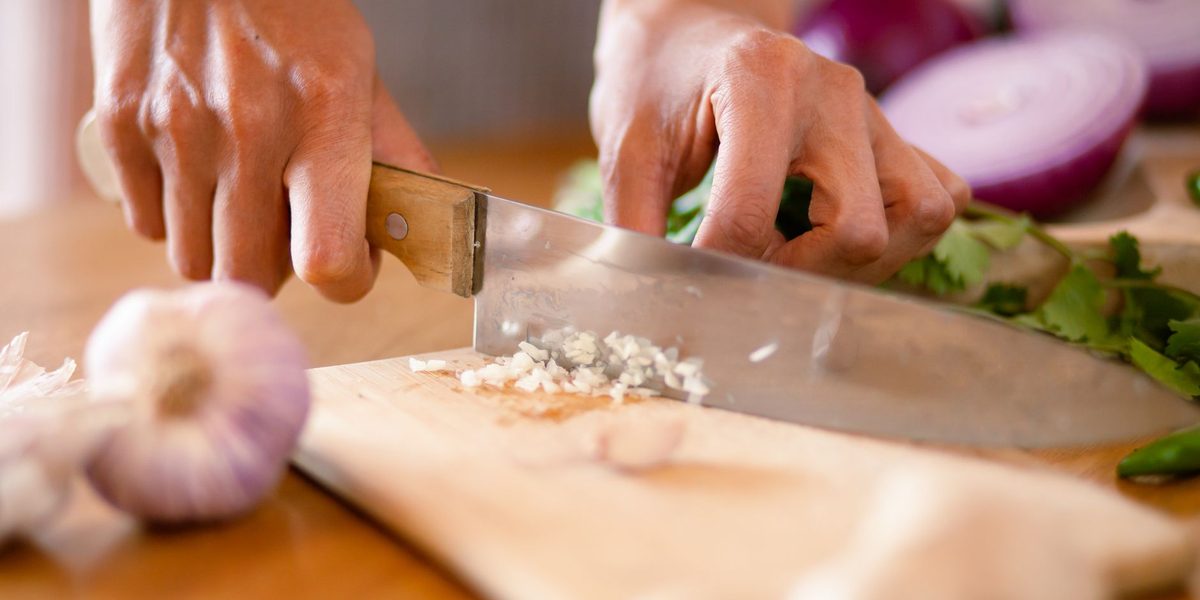
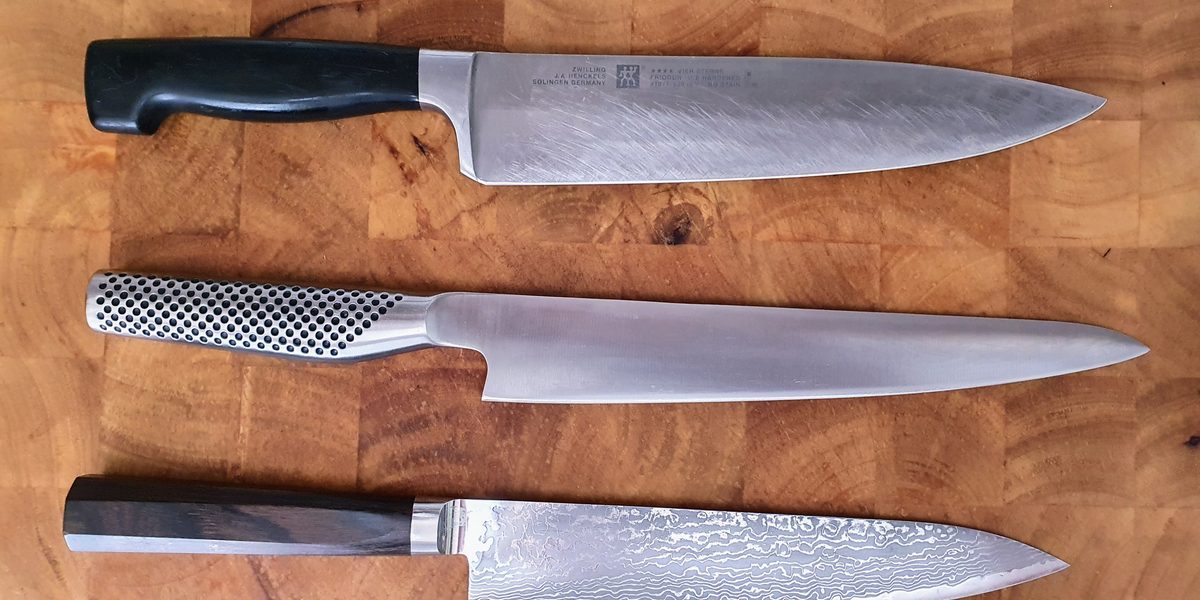
If you buy only one serious kitchen tool in your life, make it a chef's knife. Not a knife block with eleven knives you will never touch — one knife, somewhere in the eight-inch range, that feels balanced in your hand. A good chef's knife dices onions, breaks down a chicken, minces garlic, slices melon, and does ninety percent of the cutting work in a home kitchen. The block sets sold as starter kits are mostly padding: steak knives of dubious quality, a boning knife you'll use twice a year, and a chef's knife that's usually the weakest link.
Round out the cutting station with just two more blades: a small paring knife for trimming and peeling work where a big blade is clumsy, and a serrated bread knife, which also happens to be the best tool for slicing tomatoes and layer cakes. Three knives. That's the whole list. Spend whatever your budget allows on the chef's knife and go inexpensive on the other two — a cheap serrated knife performs shockingly close to an expensive one.
A Cutting Board That Can Take Abuse
A knife is only as useful as the surface under it. You want a board big enough that food isn't sliding off the edges — bigger than you think, since cramped boards are the number one reason people hate chopping. Wood and quality plastic are both fine choices; wood is kinder to knife edges and looks better on the counter, while plastic can go in the dishwasher and is sensible for raw meat. Glass and stone boards are the worst purchase in this category: they dull a blade faster than almost anything else in the kitchen and they're loud and slippery to work on. If a board is beautiful but hard as a countertop, hang it on the wall and cut on something else.
The Hand Tools That Do Real Work
Past the knife and board, a handful of hand tools carries the daily load. These are the ones worth owning in decent quality:
- Locking tongs — an extension of your hand for flipping, tossing, and serving. Skip the ones with bulky silicone paddles; slim metal tips grip better.
- A thin, flexible metal spatula — often sold as a fish turner, but it flips everything better than a thick plastic flipper, sliding under food instead of plowing into it.
- A wooden spoon or two — for stirring, scraping, and not scratching your cookware. They last decades.
- A silicone spatula — the scraping kind, for getting every bit of batter out of a bowl and folding delicate mixtures.
- A whisk — one medium balloon whisk covers dressings, eggs, and batters. You do not need a set of five sizes.
- A rasp-style grater — the long, thin kind. Garlic, citrus zest, hard cheese, ginger, nutmeg. Pound for pound, possibly the most useful small tool made.
- A vegetable peeler — the Y-shaped style is faster for most hands, but either shape works if the blade is sharp.
Notice what's not here: no avocado slicer, no herb stripper, no banana keeper. Each of those does one job that a knife or your hands already do, and each takes up drawer space year-round to save you thirty seconds twice a summer.
Measuring and Mixing, Minus the Excess
You need a set of dry measuring cups, a set of measuring spoons, and one liquid measuring cup with a spout — the classic glass style holds up forever. Add a set of nesting mixing bowls, and get metal or glass rather than the cute ceramic ones, which chip and weigh a ton. If you bake even occasionally, a simple digital kitchen scale is the sleeper pick of this whole category: it makes recipes more consistent, cuts down on dirty measuring cups, and costs less than a takeout dinner. People who buy a scale rarely go back.
One buying note on measuring gear: choose metal measuring cups and spoons over plastic. Plastic sets warp in the dishwasher, crack at the handles, and the printed markings rub off within a year, leaving you guessing which cup is which. Metal sets cost only slightly more and outlive the kitchen itself. Look for spoons narrow enough to fit inside spice jars — a small detail that matters every single time you cook.
The Quiet Essentials Nobody Talks About
A few unglamorous tools separate a functional kitchen from a frustrating one. A colander for draining pasta and rinsing produce — get metal with feet, not the collapsible silicone kind, which flexes at the worst moments. A fine-mesh strainer, which doubles as a sifter and a tool for rinsing rice. Kitchen shears that come apart for cleaning; they cut poultry, herbs, pizza, and packaging better than any knife. And an instant-read thermometer, which does more for your cooking than any gadget on this list — it ends the guesswork on chicken, roasts, bread, and fried food. Cooks who consider themselves intuitive resist buying one; the same cooks never put it down once they do.
Round out this group with a couple of half-sheet baking pans, which handle roasting vegetables, baking cookies, catching drips under a pie, and organizing prep work. They are cheap, indestructible, and stack flat. A wire rack that fits inside one turns it into a cooling station and a roasting setup in the same afternoon. None of this is exciting to buy, which is exactly why so many kitchens are missing it.
What You Can Confidently Skip
The kitchen tool industry thrives on solving problems you don't have. A garlic press does what the flat side of your knife does, then demands to be cleaned. Egg separators, strawberry hullers, corn strippers, taco holders, and pasta measurers all fall in the same bucket: single-purpose plastic that a knife, spoon, or hand replaces. Knife blocks with built-in sharpeners tend to grind edges unevenly. Utensil sets sold as twenty-piece bundles guarantee you'll own fifteen tools you never touch. And oversized novelty gadgets — quesadilla makers, dedicated slicers for one vegetable — cost counter space, which is the most expensive real estate in your home.
The test for any tool purchase is simple: does it do something a tool you already own can't do, and will you use it more than once a month? If the answer to either question is no, put it back.
How to Buy Without Overspending
Good news: this whole kit costs less than most single small appliances. Restaurant supply stores, in person or online, sell the same tongs, spatulas, whisks, and bowls that professional kitchens abuse daily, at a fraction of housewares-store prices. Spend real money in two places only — the chef's knife and the thermometer — and buy everything else on function. Skip matching sets; a drawer assembled piece by piece as needs arise always beats a bundle bought at once. And replace things when they fail, not when a newer version appears. A wooden spoon does not have model years.
Final Thoughts
A great home kitchen is not the one with the most tools; it's the one where every tool gets used. Three knives, a big board, a dozen hand tools, basic measuring gear, and a thermometer will carry you through weeknight dinners and holiday feasts alike. Buy the short list, buy it once, and enjoy the strange luxury of a kitchen drawer that actually closes.