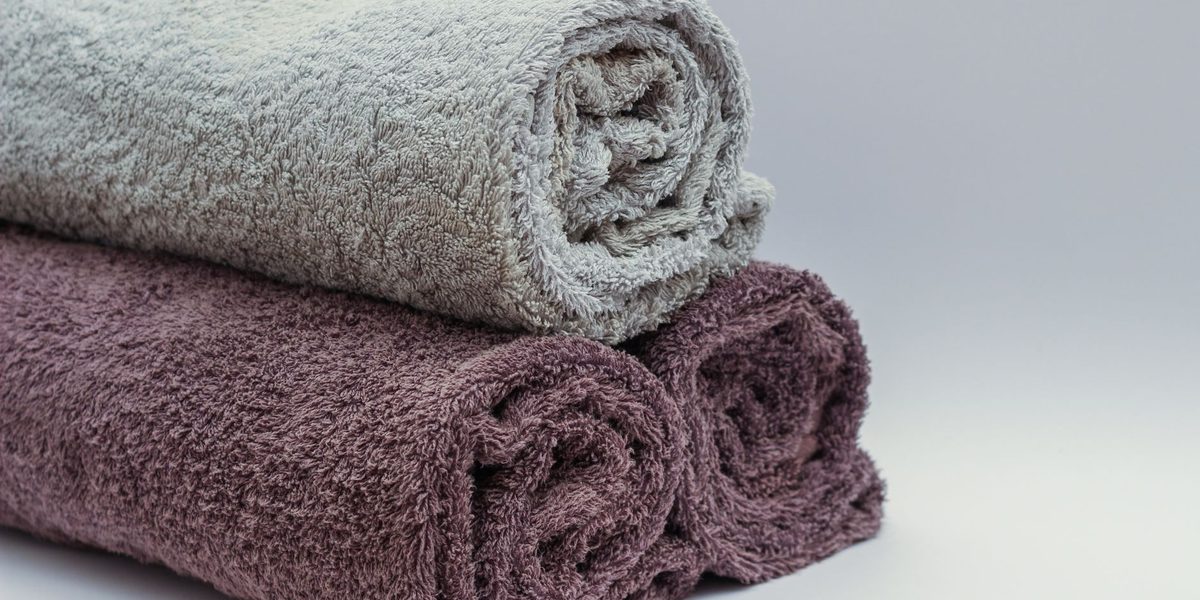
Towels are bought by hand and judged by body, and the hand is a liar. In the store, we squeeze for plushness and buy the thickest, softest stack on the shelf; at home, we discover that the plushest towel takes two days to dry on the bar, develops a mildew whisper by month three, and sheds lint like a spaniel. Towel satisfaction lives in specs nobody reads and care habits nobody teaches. Here's the honest guide: what the materials and weights actually mean, why maximum plush is often the wrong buy, and how to keep a good towel absorbent for a decade.
The Plush Paradox
Start with the counterintuitive core of the whole category: thickness and quality are not the same axis. A towel's job is threefold — absorb water fast, dry itself fast, and survive hundreds of washes. Plushness serves the first goal and fights the second: dense, heavy towels hold water so well they hold it against themselves, drying slowly on the bar, and a towel that stays damp between showers is a towel halfway to smelling musty. The luxury-hotel feel people chase also depends on industrial laundering most homes can't replicate. None of this makes plush towels bad — it makes them a choice with a maintenance bill: a warm, dry, well-ventilated bathroom and a household that spreads towels properly can enjoy heavyweight towels for years, while a humid bathroom with towels on hooks will sour them in a season. Buy plush for your bathroom's actual climate, not the store's.
Cotton Types, Decoded Honestly
The label's cotton vocabulary means more than its adjectives. Long-staple cottons — the celebrated varieties from various regions — spin into smoother, stronger yarn that stays soft and sheds less lint over years of washing; they're the real thing, worth paying for in a towel you want to keep, though the famous names attract mislabeling, so buy from sellers you trust. Ring-spun and combed cotton indicate yarn treated for softness and durability — good signs at honest prices. Plain unspecified cotton is the budget floor: absorbent and serviceable, coarser and linty-er with age. Towels blended with polyester dry faster and last long but never absorb or soften like cotton; they're rational for gyms and pools, less lovely at home. Organic and untreated cottons, for households that prioritize them, perform like their conventional equivalents at the same staple length — buy them for the growing practices, not for any promised difference in absorbency, because there isn't one.
The specialty weaves earn their niches. Waffle-weave towels absorb surprisingly well for their weight, dry on the bar faster than anything plush, and pack small — the underrated pick for humid bathrooms and small households. Flat-woven traditional towels of the hammam style share those virtues with a different feel. Microfiber dries you and itself almost instantly but polarizes on skin-feel; it wins for hair, travel, and the gym rather than the daily shower.
Weight, Explained in Plain Terms
Towel weight is measured in grams per square meter — GSM — and it's the closest thing the category has to an honest spec. In plain terms: lightweight towels (the lower band) are thin, quick-drying, quick-wearing beach-and-gym gear; midweight towels (the middle band) are the everyday sweet spot, absorbent enough to feel substantial while still drying overnight on a bar; heavyweight towels (the upper band) are the dense, spa-feel luxury that demands the ventilation honesty discussed above. Most households are best served by good midweight towels for daily rotation, with heavyweight reserved for those who've verified their bathroom can keep up. When a listing hides the weight entirely, that silence is itself information.
Weight also drives the practical costs nobody prices in at the register. Heavier towels take longer and cost more to machine-dry, crowd the washer into smaller loads, and hog linen-closet space. A household of four that steps down one weight band saves a noticeable slice of drying time every single week, forever. That's not an argument against heavyweight towels — it's the honest bill that comes with them, and it belongs in the buying decision next to the plushness.
The Buying Checklist
Beyond fiber and weight, a handful of construction details predict how a towel ages:
- Double-stitched hems and edges — the failure point on cheap towels; unraveling starts at the border, not the middle.
- Loops that stand dense and even — sparse, leaning pile is a preview of the towel at year two.
- Colorfastness signals — deep-dyed budget towels bleed for many washes; white and lighter colors age most gracefully and bleach honestly.
- Size honesty — bath towel, bath sheet, and hand towel dimensions vary wildly between makers; check the numbers, not the name.
- A hanging loop — trivial to add, disproportionately useful in real bathrooms.
And one store-floor correction: squeeze less, look more. The squeeze test measures finish — often a silicone softener applied for retail that washes out — while the loop density and hem quality you can see measure the towel.
Care: Where Towels Are Won and Lost
More towel quality is destroyed in laundry rooms than in factories. Three habits matter above all. First, skip fabric softener and dryer sheets with towels — softeners coat the fibers with exactly the water-repelling film a towel exists to not have, and they're the leading cause of towels that feel soft yet somehow don't dry you. Wool dryer balls give mechanical softness without the coating. Second, wash new towels before first use to remove the retail finish, and wash warm with modest detergent thereafter — excess detergent builds residue that stiffens pile and traps smells; an occasional hot wash with vinegar or a residue-stripping cycle resets a funky towel remarkably. Third, dry completely, every time, both in the machine and on the bar: a spread towel on a rail dries; a bunched towel on a hook ferments. Bars beat hooks, ventilation beats fragrance, and a musty towel is almost always a drying-speed problem rather than a cleanliness one — solve the airflow and the smell solves itself, no matter what the scent-booster aisle would prefer you believe.
How Many, and When to Let Go
The sensible towel wardrobe is a rotation, not a collection: two to three bath towels per person keeps every towel drying fully between uses and shares the wear, plus a guest set that stays fresh precisely because it's reserved. Buy the everyday rotation in quality midweight and replace it as a set when the pile flattens, the edges fray, and absorbency fades — several years, with good care. Retired towels descend the ladder every household already knows: bathroom to beach, beach to gym, gym to dog, dog to garage rag, a long and honorable second career after the shower years are over. And resist the matching twelve-piece bale as a default; sets bundle sizes to move inventory, and a household that buys its bath, hand, and kitchen towels deliberately ends up with better everything for the same spend.
Final Thoughts
A great towel is a small daily luxury with an unglamorous engineering brief: grab water fast, let it go fast, survive the laundry for years. Buy honest cotton at a weight your bathroom can actually dry, read the hems instead of squeezing the pile, and protect the whole investment from the fabric softener bottle. Do that, and the towel that greets you every single morning will feel remarkably like the plush one you almost bought — except drier, fresher, free of the mildew whisper, and good for years more service.