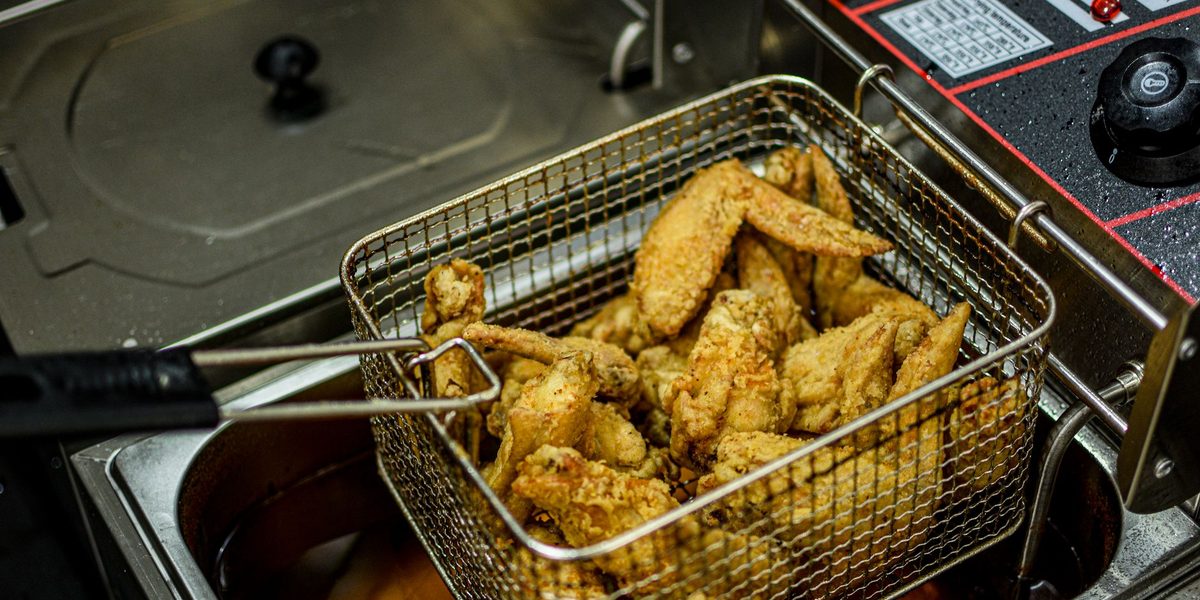
Somewhere along the way, the humble countertop grew a skyline: microwave, toaster oven, air fryer, and various hybrids of the three, all promising to be the machine you can't live without. They overlap more than any other appliance group, which makes this the category where people most often own redundant machines — and where a small kitchen can win back an entire counter by choosing wisely. Here's what each cooker genuinely does that the others can't, where the marketing blurs the lines, and which combinations make sense for different households.
What the Microwave Is Actually For
The microwave earns its near-universal presence with a superpower no other machine has: it heats the inside of food directly, in minutes, using little energy. Reheating leftovers, melting butter, steaming vegetables, warming milk, rescuing dinner for the person who got home late — this is the microwave's kingdom, and nothing else competes there. Its equally famous weakness is texture: it makes nothing crisp and turns yesterday's crust to leather. A microwave is a moisture machine.
Within the category, the honest buying advice is short because microwaves are a mature technology: pick the size that fits your dishes, favor a simple interface over a constellation of preset buttons you'll never press, and consider inverter-style models, which heat more evenly at partial power instead of pulsing full blast. Sensor reheat is the one genuinely useful luxury. Everything else on the spec sheet is padding. One honest exception for tight kitchens: over-the-range and built-in placements reclaim an entire counter section, and if a renovation or a mounting kit makes that possible, it's worth more than any feature on the machine itself. The microwave is the appliance most homes need and least need to see.
What the Air Fryer Actually Is
The air fryer deserves both its popularity and a little demystification: it is a small convection oven with a fan close to the food and a perforated basket. That's the whole trick — and it's a good trick. The intense circulating heat crisps food faster than a big oven, with results close enough to frying for most cravings: crackly roasted vegetables, revived leftover pizza, frozen snacks that come out crunchy instead of sad, chicken with genuinely crisp skin. For one or two people, it often replaces the big oven entirely for weeknights, preheating in two minutes instead of fifteen.
Its limits are size and shape. The basket crowds easily, and crowded food steams instead of crisps, so family-scale cooking means batches. Baking is awkward, toast is not its event, and anything saucy belongs elsewhere. Buy the basket size for your household honestly — the small cute one frustrates a family of four within a week — and favor models with dishwasher-safe baskets, because the basket is the whole cleanup story.
The Toaster Oven: The Quiet All-Rounder
The toaster oven is the least hyped of the three and arguably the most versatile. It toasts, obviously, and better than pop-up toasters handle anything beyond sliced bread — bagels, open-faced melts, thick artisan slices. But a good one is really a miniature oven: it bakes a small casserole, roasts a tray of vegetables, crisps leftovers, and handles the endless small jobs too minor to justify heating the full-size oven. Modern convection toaster ovens with strong fans blur into air fryer territory outright, and many now include an air-fry basket that performs honorably.
Weak points: it's slower to crisp than a dedicated air fryer basket, it takes real counter depth, and cheap models with weak elements toast unevenly and bake worse. This is a category where mid-range spending pays — solid construction, an interior light, and racks that don't rattle turn it into the most-used machine in the kitchen.
The Hybrid Question
The market's answer to the overlap is the combination machine — air-fryer toaster ovens, microwave-convection combos, and multi-mode countertop ovens that claim to be everything. The fair verdict is that they've gotten genuinely good, with one consistent caveat: a hybrid does its second job at eighty-five percent. An air-fry toaster oven crisps slightly slower than a basket machine; a convection microwave bakes acceptably but not memorably. For a small kitchen, eighty-five percent twice over from one footprint is a fantastic deal. For a kitchen with space, two dedicated machines still edge it out. Judge hybrids by your square footage, not by their spec sheets.
One buying caution on hybrids: complexity is their tax. More modes means more controls, more heating elements, and more things to fail, and the multi-mode machines have shorter average working lives than their single-minded cousins. Favor hybrids from the toaster-oven direction — an oven that learned to air fry — over gadget-first machines that learned to do everything at once, and keep the interface as close to two dials as the market allows. The best hybrid is a good oven with a fan, not a spaceship with a toast setting.
Sensible Setups by Household
Rather than ranking the machines, match the combination to the life:
- Studio or tiny kitchen — one machine: a convection toaster oven with air-fry mode, or a microwave-convection combo if reheating rules your life.
- Couple that cooks — microwave plus air-fry toaster oven; covers reheating, toast, roasting, and crisping in two footprints.
- Busy family — microwave plus a full-size-leaning toaster oven or large-basket air fryer; batch capacity matters more than speed.
- Leftovers-and-frozen-food household — microwave plus basic air fryer; the two-machine combo that revives anything.
- The rarely-cooks household — an honest microwave alone, and the counter space as a gift.
Notice that the pop-up toaster appears nowhere: if you own a toaster oven, it's redundant, surviving on nostalgia and slightly faster toast. Households devoted to daily perfect toast may overrule this — knowingly. The same honest reckoning applies to any countertop machine already in your kitchen doing a job a newer arrival now does better: two machines covering one job is how counters disappear, and the kindest thing to do with the loser is to donate it while it still works.
Features Worth Money and Features Worth Ignoring
Across all three categories the same pattern holds. Worth paying for: even heating (the thing reviews actually test), capacity matched to your household, interiors that wipe clean, dishwasher-safe baskets and trays, and physical dials that survive greasy fingers. Worth ignoring: app connectivity on any of them, dozens of presets, built-in recipe screens, and rotisserie kits that get used once. The countertop cooker category rewards boring competence more than any other appliance group — the machine that simply gets hot, evenly, every time, wins the decade.
One safety-adjacent note that doubles as a buying tip: these machines run hot in a small footprint, so check clearance requirements against your actual counter and cabinets before buying, especially for units that vent from the back. The perfect machine that doesn't fit under your cabinets with room to breathe is the wrong machine.
Final Thoughts
The countertop cooker aisle sells the same hot air three ways — sometimes literally — and the winning move is to stop asking which machine is best and start asking which gaps your kitchen actually has. Reheating is the microwave's job, crisping belongs to a fan and a basket, and the toaster oven quietly does a little of everything in between. Pick the smallest set of machines that covers your real week, let the hybrids compress the footprint where space is tight, and enjoy the rarest luxury available in a modern kitchen: a long, clear, gloriously empty stretch of counter with nothing on it at all.