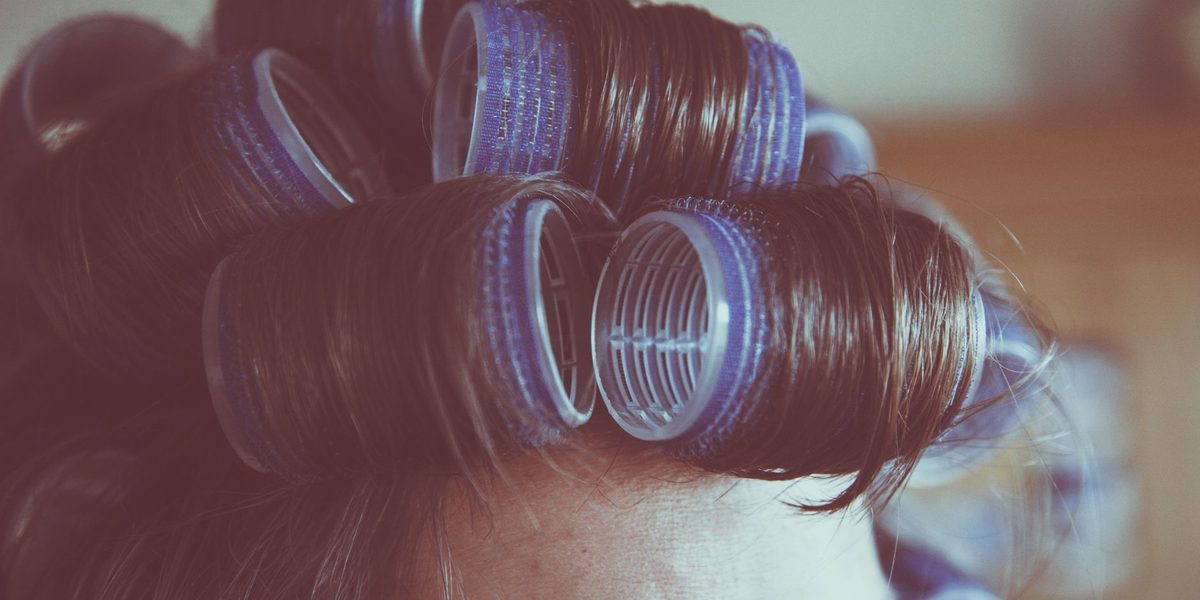
Somewhere between the flexi-rod veterans and a viral robe-tie experiment, heatless curling became a full-blown movement. The pitch is irresistible: wrap your hair around something soft before bed, sleep like a Victorian heroine, and wake up with bouncy waves — zero heat damage, zero effort, zero styling skill. The comment sections show glorious results and spectacular failures in equal measure. So what's the honest verdict on the heatless curl trend: a genuinely better way to style hair, or a pretty idea that works for a lucky few and wastes everyone else's evening?
What Counts as Heatless Curling
The category is really a family of methods sharing one principle: hair sets into whatever shape it dries in. Wrap damp hair around a form — a padded ribbon or curling rod set, soft foam rollers, braids, twisted buns, sock buns, or the belt of a bathrobe — leave it while the hair dries, and the strands hold that shape. Heat styling does the same thing faster by using temperature to break and reset the hair's shape; heatless methods let time and evaporation do the work instead.
That principle explains almost every success and failure in the genre. Because the set depends entirely on drying in place, the variables that matter are dampness level, wrap tension, drying time, and your hair's willingness to hold a shape — not which viral tool you bought. The tools are ergonomics; the physics is universal.
The Case That It's Genuinely Better
The damage argument is real and significant. Repeated high-heat styling degrades hair cumulatively — dryness, split ends, weakened strands, faded color — and no thermal protectant fully prevents it. A styling method with a damage cost of approximately zero is a legitimate upgrade, especially for people who curl their hair several times a week. Over months, the difference in hair condition between a daily hot-tool user and a heatless convert is often visible without a microscope: better shine, fewer broken flyaways, ends that last longer between trims.
The results themselves also have a distinct character that many people prefer. Heatless sets tend to produce softer, bendier waves rather than the uniform ringlets of a curling iron — a more lived-in, undone finish that suits current tastes. Add the time-shifting benefit — the work happens while you sleep, and mornings become a thirty-second unwrapping — and the method genuinely earns its devotees. For frequent stylers with medium-textured, shoulder-length-plus hair, this is one of the rare trends that delivers roughly what the videos promise.
The Case That It's Overhyped
Now the failures, which are just as instructive. Heatless curls are dramatically less reliable than heat. A curling iron produces the same curl at 7 a.m. as at midnight; an overnight set produces whatever your dampness level, sleep movement, and hair mood decide. Too wet, and you wake with damp, limp hair that never set. Too dry, and the shape barely takes. Wrapped unevenly, one side bounces while the other droops. The learning curve is real, and the first week of attempts is usually a montage of lopsided outcomes.
Hold is the second honest weakness. On resistant hair — very straight, heavy, coarse, or low-porosity — heatless waves can relax within hours, especially in humidity, while a heat-set curl survives the day. And the comfort factor is not trivial: sleeping in rods, buns, or a padded headband ranges from unnoticeable to genuinely sleep-disrupting depending on the method and the sleeper. A styling technique that costs you sleep quality is not free, whatever it saves your hair.
Who Wins With This Trend
Pattern-matching across the successes and failures, the fit comes down to hair and lifestyle:
- Best candidates: hair with some natural wave or texture, medium thickness, shoulder-length or longer, styled frequently enough that heat damage is a real concern.
- Good candidates: fine hair that heat easily fries — with the caveat that gentler tension and lighter products are essential to avoid flattening it.
- Tough matches: very straight, heavy, or extremely short hair, and anyone who needs guaranteed, identical results on a schedule.
- Lifestyle fit: evening-routine people thrive; anyone who showers in the morning and leaves in forty minutes will find the drying-time math simply doesn't work without changing their whole schedule.
Technique: Where the Verdict Actually Gets Decided
Most heatless disappointment is technique failure wearing the costume of "my hair just can't do this." The dampness sweet spot is the big one: hair should be almost dry — barely damp to the touch — before wrapping. The second lever is tension: firm, consistent wrapping sets better than loose draping, and smaller sections curl more reliably than fat ones. Third is setting aids: a light mousse or setting spray on damp hair meaningfully improves hold on resistant textures, and a blast of cool air or a patient hour before unwrapping beats tearing the set down early. Finally, hands off — separating curls immediately with fingers relaxes them; letting them cool and settle first preserves the shape.
Give the method five honest attempts with those variables controlled before ruling on it. Most people who declare their hair immune quit after two chaotic tries with soaking-wet hair and a loose wrap — which is like reviewing a cake recipe you refused to measure.
Choosing Among the Methods
Within the heatless family, the tools sort themselves by the curl they produce and the sleep they cost. Padded ribbon and robe-tie wraps give large, glamorous waves and are among the most comfortable to sleep in, but they struggle to grip shorter or very layered hair. Flexi-rods and foam rollers produce tighter, more defined curls with the best hold on resistant hair — and the worst sleeping experience in the category. Braids are the free, zero-purchase option: a few loose braids give beachy crimps, multiple tight braids give dense waves, and the results are the most forgiving of imperfect technique. Twisted buns and sock buns sit in the middle — decent waves, decent comfort, no cost.
The honest buying advice is to start with whatever costs nothing. Braid or bun your almost-dry hair tonight and you'll learn more about your hair's willingness to hold a heatless set than any purchased kit can tell you. If the shape takes, upgrading to a dedicated tool refines the result and the comfort. If your hair shrugs off a tight overnight braid entirely, no viral ribbon will rescue the physics, and you've saved yourself the purchase and the disappointment in one evening.
The Middle Path: Hybrid Styling
The binary framing — heatless purist versus hot-tool loyalist — misses where many experienced stylers actually land. Heatless sets for everyday texture, heat reserved for occasions that demand precision, is a pattern that captures most of the damage savings while keeping reliability on call. Similarly, a brief pass of low heat to finish an almost-successful heatless set costs a fraction of the damage of curling from scratch. Judged as an addition to the styling toolbox rather than a religion, the trend looks considerably better than either extreme suggests.
Final Verdict
Heatless curls earn a genuine recommendation — with an honest asterisk. For the right hair type and the right routine, this is that rare beauty trend that's simultaneously gentler, cheaper, and prettier than what it replaces, and frequent heat stylers owe their future hair a real attempt at it. But it is not universal, it is not effortless, and it is not reliable enough to be anyone's only method for high-stakes days. Verdict: better for your hair, worth the learning curve, and honestly oversold as magic. Treat it as a skill to practice rather than a product to buy, and it delivers.